The Hidden Signs Your Boat Propeller Needs Repair
A Miami Captain’s Guide
Shipyard
A propeller that’s a few mils out of pitch costs you fuel, vibration, and bearings — and it rarely announces itself.
Your propeller is the precision part doing the most work on the boat, in the harshest spot on the boat. It’s the link between your engine and forward motion, and when it’s off — even slightly — you feel it everywhere: at the fuel dock, at the helm, and eventually in the engine room when a tired prop starts taking bearings and shaft with it.
The frustrating part is that propeller damage is usually quiet before it’s expensive. Most owners don’t catch it until performance drops off a cliff. In Miami, where saltwater and marine growth go to work year-round, the window between “slightly off” and “now it’s a haul-out” is shorter than most people think. Here’s how to read the warning signs early — and what proper repair actually involves.
Six Hidden Signs Your Propeller Needs Attention
These are the symptoms that show up before you have visible, obvious damage. Catch them here and you’re tuning a prop. Ignore them and you’re replacing running gear.
- Vibration at cruise that gets worse at WOT. A little vibration is easy to write off. But vibration that climbs as you push
toward wide-open throttle is the classic signature of a bent blade or a prop that’s out of balance. That shaking isn’t just
uncomfortable — it transmits straight into your cutlass bearing, shaft seal, and struts.
- Top RPM that doesn’t match what it used to. If your engines can’t reach the RPM they used to hit at WOT, the prop is a prime suspect. Damage or incorrect pitch loads the engine like dragging a brake. Over time, that also lugs the engine and shortens its life — so this one is worth chasing down, not living with.
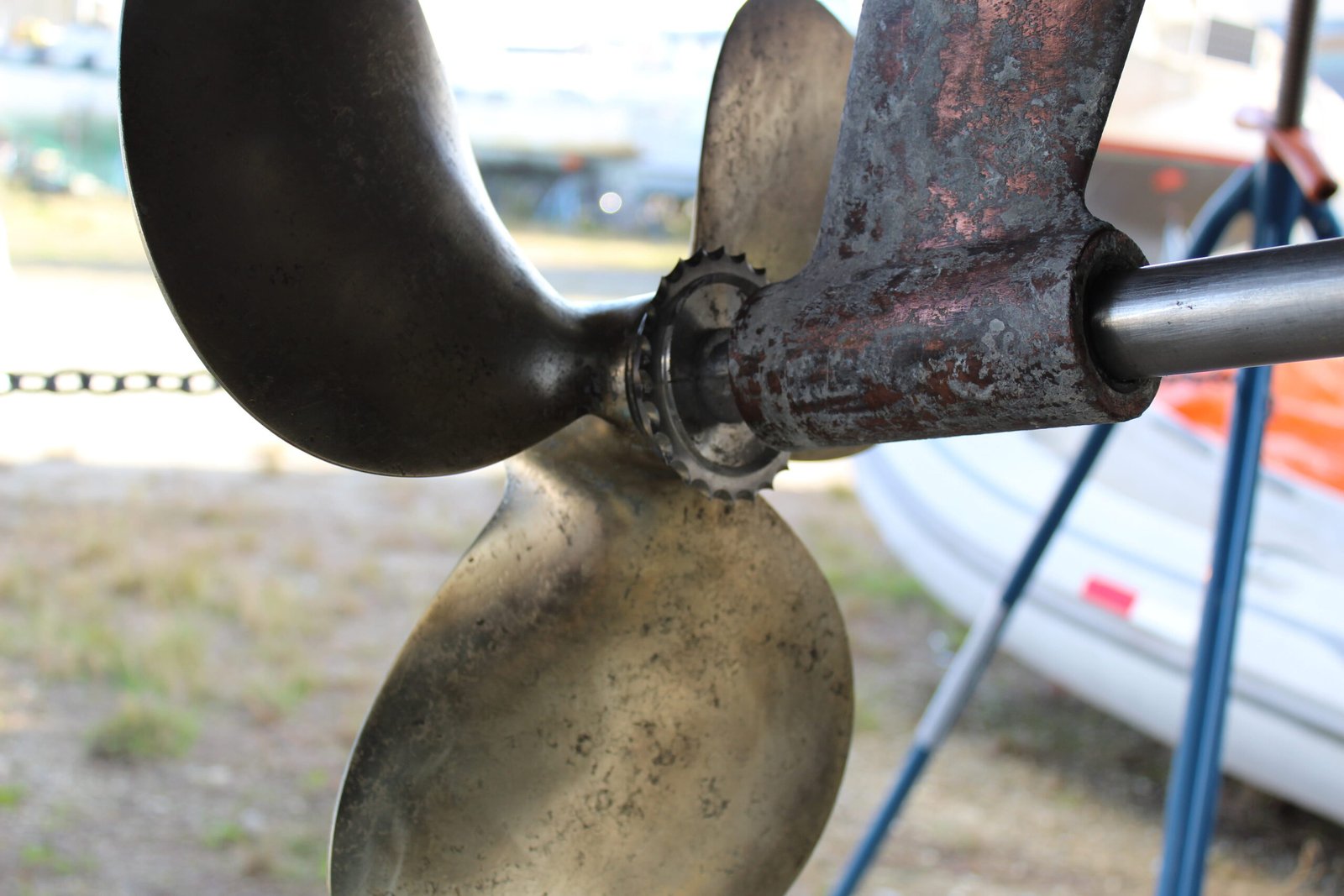
- Visible chips, dings, or rolled edges.Even small nicks create imbalances that get worse over time and reduce
efficiency. They usually come from striking debris, a sandbar, or grounding. In South Florida’s shallow flats and grass,
this happens to careful captains too — a quick check after running skinny water saves you a lot.
- Growth on the blades within weeks of a clean.Barnacles, slime, and algae don’t just look bad — they fundamentally change how the blade moves through the water, adding drag that forces the engine to work harder and burns more fuel. In Miami’s warm water, bare running gear can foul within weeks. If your blades green up fast, that’s a maintenance signal, not a cosmetic one.
- Fuel burn climbing at the same cruise speed.f you’re burning more to hold the same cruise you ran last season, your
prop is making the engine work harder for the same result. A damaged, fouled, or out-of-pitch prop is one of the most
common causes — and one of the easiest to verify.
- Unusual cavitation noise from the running gear.Cavitation — air bubbles forming and collapsing against the blade — shows up as distinctive noise and, over time, pitting and burn marks on the blade surface. It robs efficiency and tells you the blade geometry or surface isn’t doing its job anymore.

Why Miami Is Especially Hard on Propellers
The conditions here accelerate propeller wear well beyond normal use:
- Marine growth is relentless in warm water and bonds to bare running gear within weeks of a clean.
- Saltwater corrosion moves faster than in freshwater — saltwater is a far better electrical conductor, so the electrochemical process that eats metal runs harder. This is also why healthy anodes matter to your props, not just your hull.
- Shallow and grassy water around the bay and the flats means more chances for blade contact than open, deep cruising grounds.
None of this means you babysit the boat. It means a prop in Miami needs to be looked at more often than the manuals — written for milder places — suggest.
What Proper Propeller Service Actually Includes
A real prop service is more than a quick cleanup. It’s precision work on a precision part:
- Tuning to manufacturer spec — pitch, blade alignment, and surface, brought back to where the prop was designed to perform.
- Impact damage repair — straightening, welding, and refinishing chips, dings, and rolled edges.
- Dynamic balancing — and this is non-negotiable. A repaired prop that isn’t rebalanced will vibrate. We dynamic-balance every prop we touch.
- Pitch change for a repower or a performance tune, when the boat’s needs have changed.
We work with DETRA, VEEM (performance and Class-rated), and Rolla (high-performance and surface-piercing) propellers — service, tuning, and repair across all three.
Keep Clean Blades Longer with PropSpeed
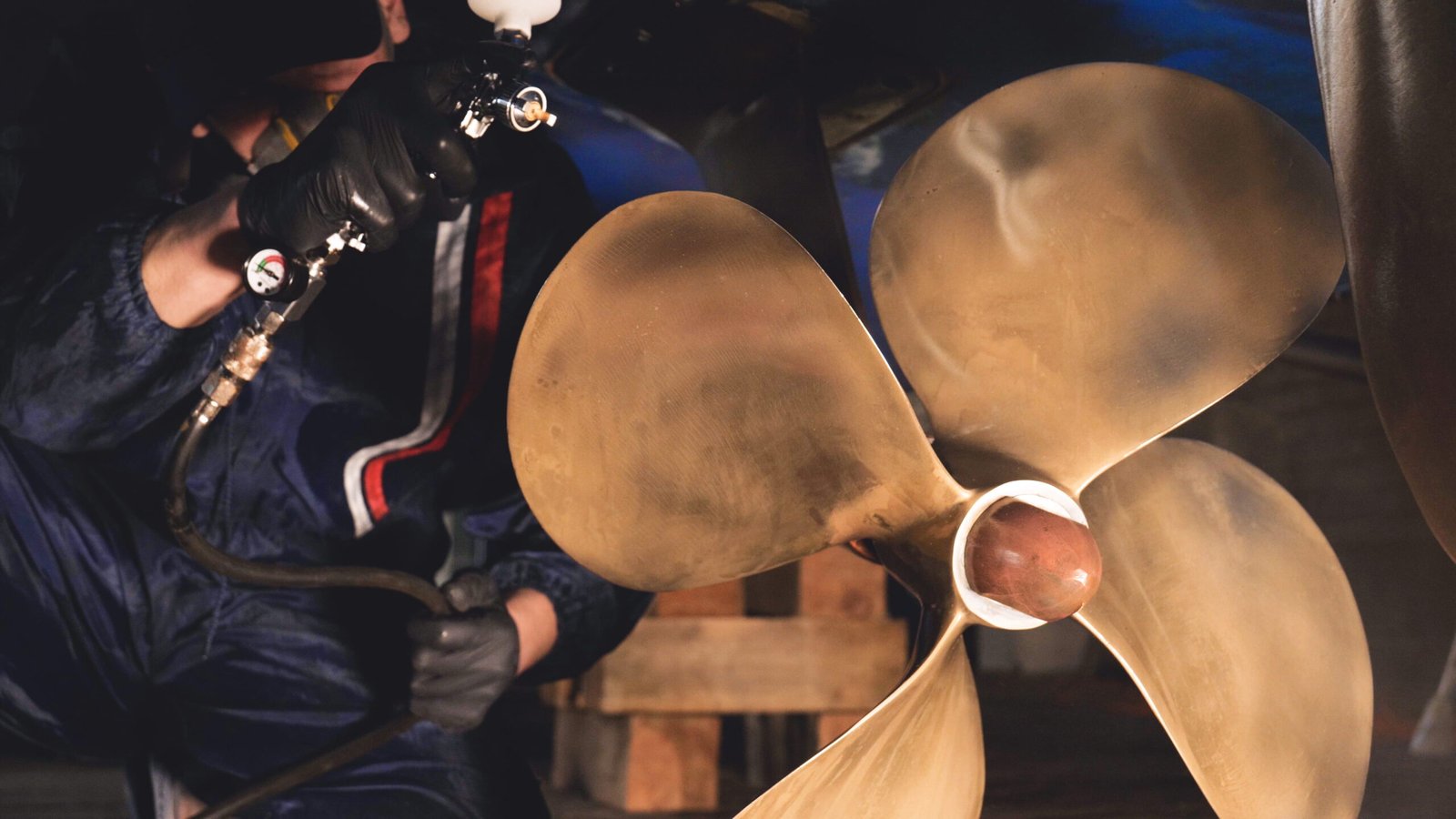
You can’t antifoul running gear the way you do a hull — so the question becomes how to keep growth off the blades. That’s where PropSpeed comes in. It’s a foil-release coating that growth doesn’t bond to easily, so properly applied it keeps your blades clean far longer than leaving bare metal exposed. As an authorized PropSpeed applicator, we apply it as part of prop service while the running gear is already out and accessible.
Why You Don't Wait on This
A propeller problem rarely stays a propeller problem. Vibration from an out-of-balance or bent blade travels straight into the cutlass bearing, shaft seal, and struts — turning a tuning job into a running-gear job. Catching the signs above early is the difference between a bench tune and a haul-out with a parts list.
Related Posts
Essential Maintenance Stepsfor 2025
The Hidden Signs Your Boat Propeller Needs Repair A Miami Captain’s Guide Schedule a Repair?…
What expert captains never tell you
The Hidden Signs Your Boat Propeller Needs Repair A Miami Captain’s Guide Schedule a Repair?…
The Hidden Signs Your Boat Propeller Needs Repair
The Hidden Signs Your Boat Propeller Needs Repair A Miami Captain’s Guide Schedule a Repair?…
tast_comment